Summit County Dog Registration Information
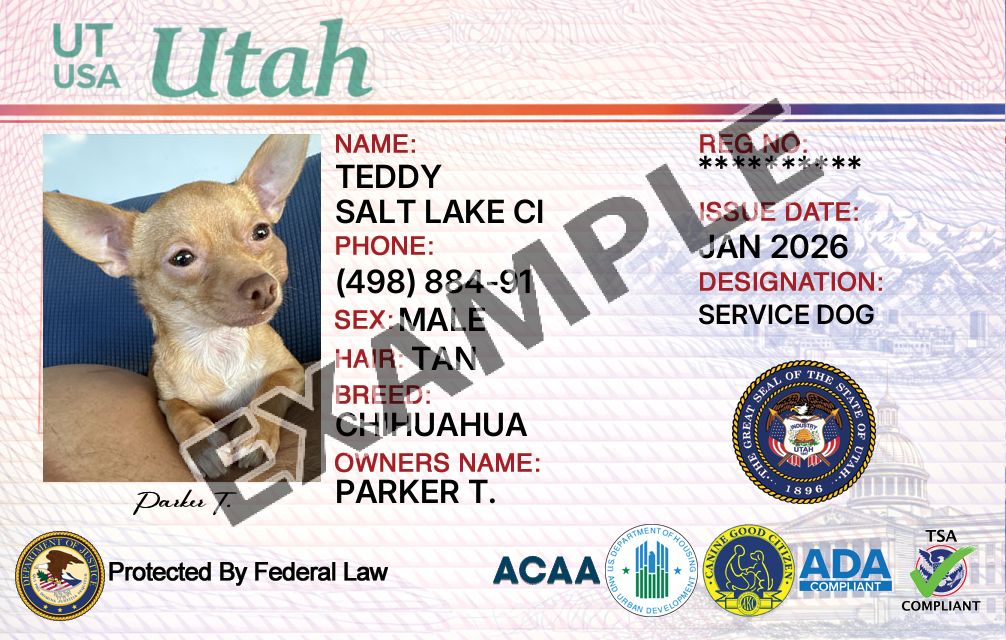
Service Dogs and Emotional Support Animals in Summit, Utah
If you’re searching where do I register my dog in Summit County, Utah for my service dog or emotional support dog, the most important thing to know is this: a dog license in Summit County, Utah is generally a local animal control requirement tied to public health (especially rabies vaccination) and identification. It is not the same thing as “registering” a service dog for legal status, and it is also different from documentation people sometimes seek for emotional support animals (ESAs).
Where to Register or License Your Dog in Summit County, Utah
Because licensing is often handled at the county or city level, start with Summit County’s official animal control office. If you live inside a city boundary, you may also interact with city offices for related ordinances or enforcement, but dog licensing in many areas of Summit County is routed through county animal control.
Summit County Animal Control
Address: 1745 S Hoytsville Road
City/State/ZIP: Wanship, UT 84017
Phone: (435) 336-3985
Email: animalcontrol@summitcountyutah.gov
Office Hours: Monday – Saturday: 10:30 a.m. – 4:30 p.m.
Closed: Sundays & holidays
Officer Availability: Monday – Sunday: 8 a.m. – 4 p.m.
After-hours (non-emergency dispatch): (435) 615-3601
Park City Municipal Corporation (City Offices)
Address: 445 Marsac Avenue
City/State/ZIP: Park City, UT 84060
Phone (Main Line): (435) 615-5000
If you’re still unsure where to register a dog in Summit County, Utah, begin with Summit County Animal Control. They can confirm whether your address is served by the county program or a city-specific process.
Overview of Dog Licensing in Summit County, Utah
What “registering” a dog usually means
In everyday terms, “registering” your dog generally refers to obtaining a local license (often including a tag). Licensing is primarily about:
- Confirming your dog meets public health requirements (especially a current rabies vaccination)
- Linking your dog to an owner and address for identification and reunification
- Supporting animal control services and enforcement
Summit County licensing basics (countywide framework)
Summit County’s animal control regulations require dogs to be licensed, with licensing connected to rabies vaccination status. County rules also describe that licensing may be issued by the Animal Control Department (or an authorized designee) after an application, evidence of current rabies registration, and payment of fees.
Rabies vaccination requirements (public health foundation)
Rabies vaccination is a cornerstone requirement for licensing and is also a critical safety measure. While specific timing and renewal schedules can depend on vaccine type and veterinary guidance, local rules commonly require vaccination beginning when dogs reach a minimum age and keeping it current. If your dog’s rabies vaccine is valid for a longer period (for example, a 3-year vaccine), that can affect the license term offered.
How Dog Licensing Works Locally in Summit County, Utah
Why licensing is handled locally (county vs. city)
Dog licensing in Utah is typically enforced at the local level through county and city ordinances. That’s why the best answer to where do I register my dog in Summit County, Utah for my service dog or emotional support dog is usually: start with the local authority responsible for the area where you live. In Summit County, that is often Summit County Animal Control, but city boundaries can affect which office handles certain complaints, citations, or local rules.
Typical steps to get a dog license in Summit County, Utah
- Confirm jurisdiction: Verify whether Summit County Animal Control issues the license for your address, or whether a city program applies.
- Get rabies vaccination documentation: Obtain proof from your veterinarian showing your dog is currently vaccinated.
- Apply for the license: Complete the local licensing process (in person and/or through official county systems, if available).
- Pay the licensing fee: Fees vary by local rules and may differ based on license term.
- Keep the tag/current proof: Local regulations commonly require the license tag to be attached to your dog’s collar/harness (or approved alternative identification methods in limited situations).
License term and renewals
License terms can vary. Summit County materials indicate that multi-year licensing may be available when your dog has a multi-year rabies vaccination, and county regulations describe one-year or three-year licensing tied to rabies vaccine duration. Plan ahead to renew before expiration to avoid citations and to keep your dog’s identification current.
What licensing is not
A local dog license is not a “certification” of training or behavior, and it does not convert a pet into a service animal or emotional support animal. It’s a local legal and public-health requirement that can apply regardless of your dog’s role.
Service Dog Laws in Summit County, Utah
Service dog status vs. dog license
A service dog is defined by what the dog does: it is trained to perform specific tasks for a person with a disability. This is separate from getting a dog license in Summit County, Utah. Even if your dog is a service dog, you may still need to follow local licensing and rabies vaccination rules where you live.
Do you have to “register” a service dog?
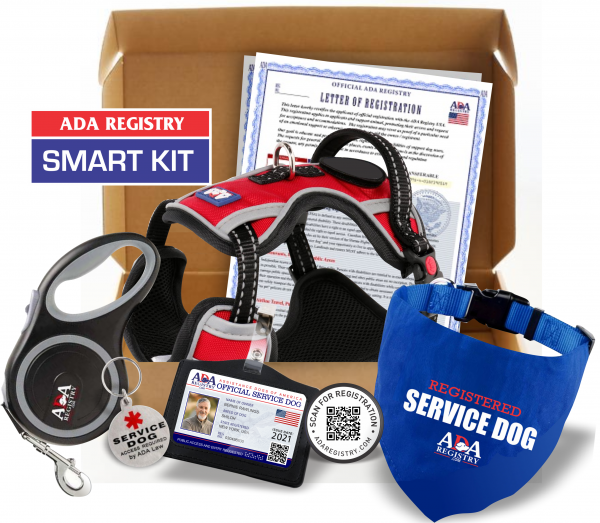
In the U.S., there is no single government “service dog registry” that you must use for the dog to be legally recognized for public access. Many websites sell “registrations,” certificates, or ID cards, but those are not required under federal public-accommodation rules. What matters is that the dog is trained to do work or tasks related to a disability and behaves appropriately in public settings.
What to expect locally
Locally, animal control or city staff may focus on the same core requirements for all owned dogs—especially rabies vaccination compliance and licensing—rather than asking for a special service-dog “registration.” If you have questions about local processes for a working dog, start with the official offices listed above.
Emotional Support Animal Rules in Summit County, Utah
ESA status vs. dog license
An emotional support animal (ESA) provides comfort by presence, but an ESA is not the same as a trained service dog under federal public-access rules. If you have an ESA dog, you may still need a local animal control dog license Summit County, Utah and current rabies vaccination just like any other dog residing in the community.
Housing is usually where ESA rules matter most
ESA issues most often come up in housing situations (for example, requesting a reasonable accommodation). That process is different from local dog licensing. Licensing is an animal-control/public-health requirement, while ESA documentation typically involves a disability-related need and the rules that apply to housing providers.
Avoid confusion about “ESA registration”
If you’re trying to figure out where to register a dog in Summit County, Utah because you have an ESA letter, remember: the local licensing office is usually not issuing “ESA registrations.” The licensing office is focused on rabies compliance, owner identification, and local ordinances. Keep your ESA documentation for housing requests, and keep your dog’s license/rabies proof for animal control compliance.
Frequently Asked Questions
Disclaimer
Licensing requirements and office locations may change. Residents should verify details with their local animal services office within Summit County, Utah.
Register A Dog In Other Utah Counties
Select your county below to get started with your dog’s ID card. Requirements and license designs may vary by county, so choose your location to see the correct options and complete your pup’s registration.
- Beaver County Dog Registration
- Box Elder County Dog Registration
- Cache County Dog Registration
- Carbon County Dog Registration
- Daggett County Dog Registration
- Davis County Dog Registration
- Duchesne County Dog Registration
- Emery County Dog Registration
- Garfield County Dog Registration
- Grand County Dog Registration
- Iron County Dog Registration
- Juab County Dog Registration
- Kane County Dog Registration
- Millard County Dog Registration
- Morgan County Dog Registration
- Piute County Dog Registration
- Rich County Dog Registration
- Salt Lake County Dog Registration
- San Juan County Dog Registration
- Sanpete County Dog Registration
- Sevier County Dog Registration
- Tooele County Dog Registration
- Uintah County Dog Registration
- Utah County Dog Registration
- Wasatch County Dog Registration
- Washington County Dog Registration
- Wayne County Dog Registration
- Weber County Dog Registration